Independent Work And Compliance: The Regulatory Frameworks Surrounding Portfolio Career Risk
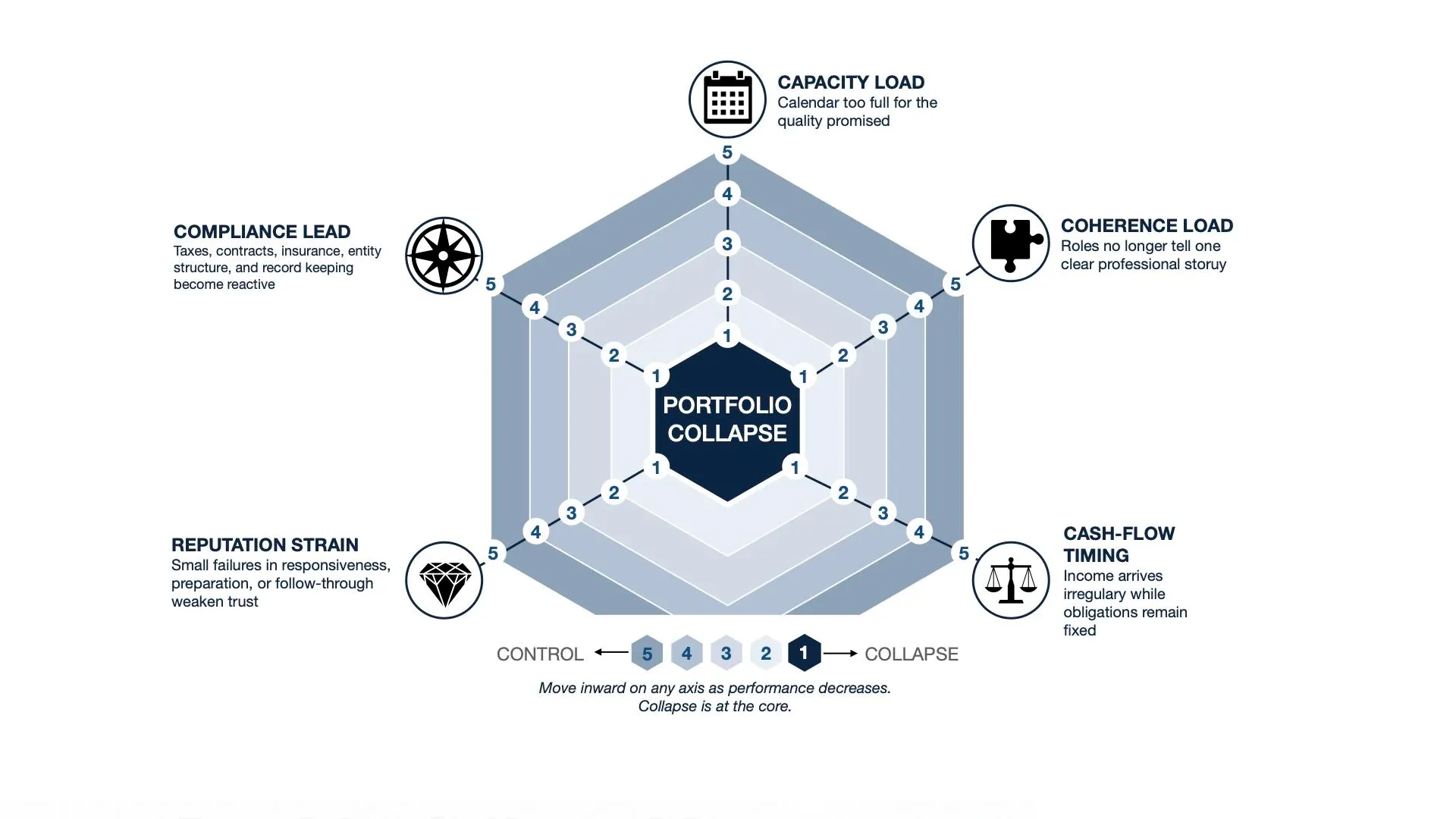
The sustainability of a portfolio career, built from consulting, freelancing, and advisory engagements, depends substantially on compliance with a regulatory framework that independent professionals often underestimate. The warning signs of a declining practice frequently manifest first as compliance gaps, tax exposures, or classification disputes that compound financial distress if unaddressed.
Worker classification is the foundational compliance issue. The Internal Revenue Service applies a twenty-factor common law test, and the Department of Labor, under the Fair Labor Standards Act, employs an economic reality test that has shifted between administrations. Misclassifying an engagement as independent contracting when the relationship resembles employment exposes the practitioner to back taxes, penalties, and wage obligations. States apply their own standards under unemployment insurance and workers' compensation law, often stricter than federal thresholds.
Tax compliance grows more complex as income diversifies. Self-employment tax obligations, estimated quarterly payments, and Section 199A qualified business income deductions require disciplined recordkeeping. Practitioners receiving income from multiple payors must track each engagement's documentation, and failure to remit estimated taxes triggers underpayment penalties. State nexus rules, particularly for remote engagements crossing state lines, create multi-state filing obligations that practitioners frequently overlook.
Business licensing and regulatory registration impose additional requirements. Many states require professional licenses for consulting in regulated fields such as finance, law, and healthcare. Investment advisory activity, even incidental, may trigger registration under state or federal law. Providing services to regulated industries often requires compliance with client codes of conduct, conflict-of-interest disclosures, and data protection agreements that mirror the client's own regulatory obligations.
Contractual compliance defines the boundaries of each engagement. Scope creep, indemnification clauses, intellectual property assignments, and limitation of liability provisions must be reviewed before execution, as boilerplate terms can expose the practitioner to losses exceeding engagement fees. Insurance coverage, including professional liability and cyber liability, is increasingly mandated by clients.
The practitioners who sustain portfolio careers over decades treat compliance as ongoing infrastructure rather than periodic inconvenience. Maintaining proper entity structure, current licenses, accurate tax filings, defensible contracts, and adequate insurance creates a foundation that absorbs the inevitable fluctuations of independent practice. Conversely, those who neglect these obligations discover that compliance failures, not market forces, frequently precipitate the collapse that initial warning signals portend.